Portada original de la Guía de Vinos Patrimoniales del Perú, con ilustraciones multicolores
FIRST EDITION · 2026

A heritage that looks to the future

A journey through the heritage grape varieties and regions that are shaping the new identity of Peruvian wine.

VIEW ALL WINES ↗ ↓ DOWNLOAD PDF
THE GUIDE · 2026

A story that is being retold.

From the coastal valleys to the Andean landscapes, Peru’s traditional and Criolla grape varieties preserve centuries of winemaking history. This guide features 62 wines from six regions.

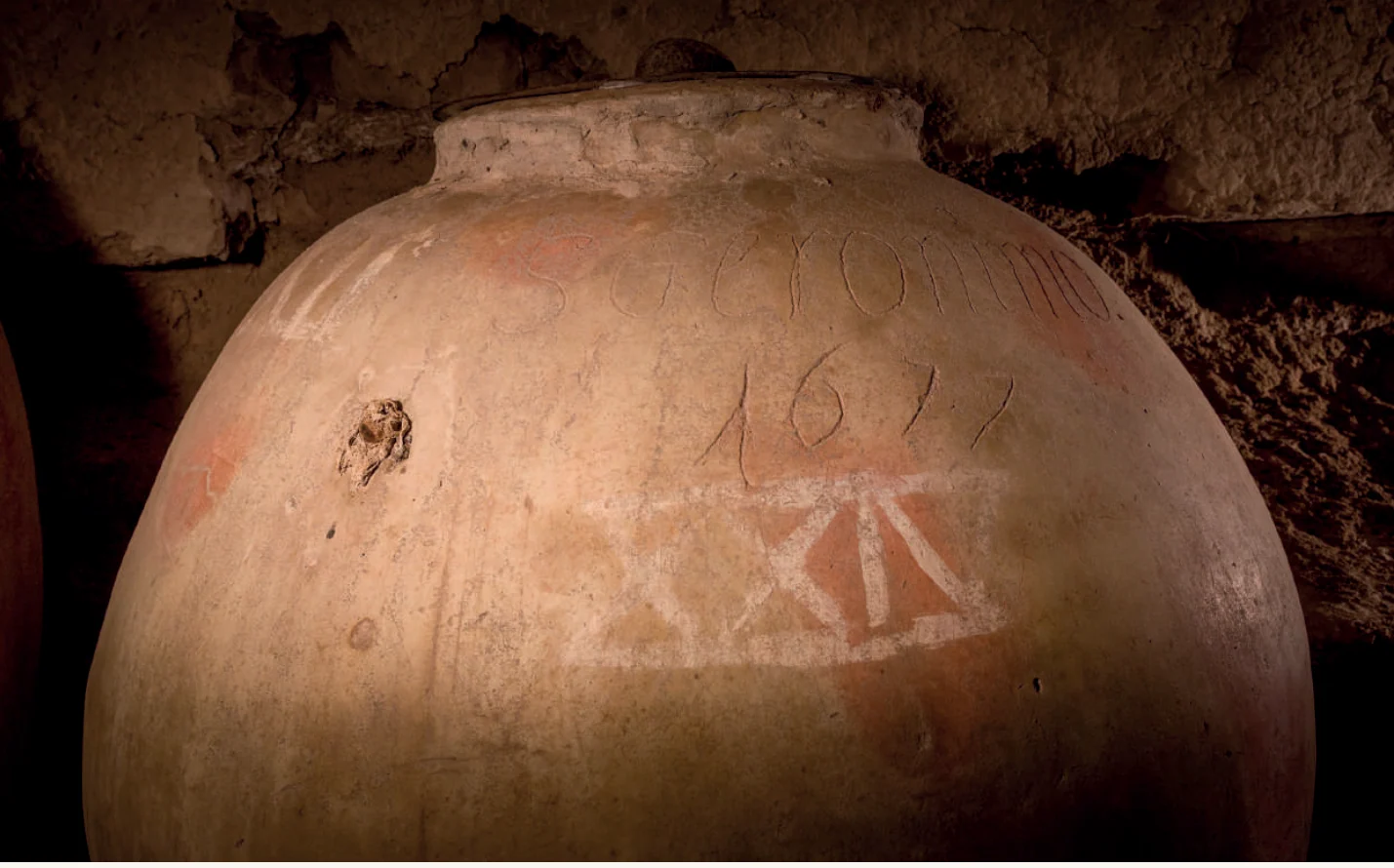
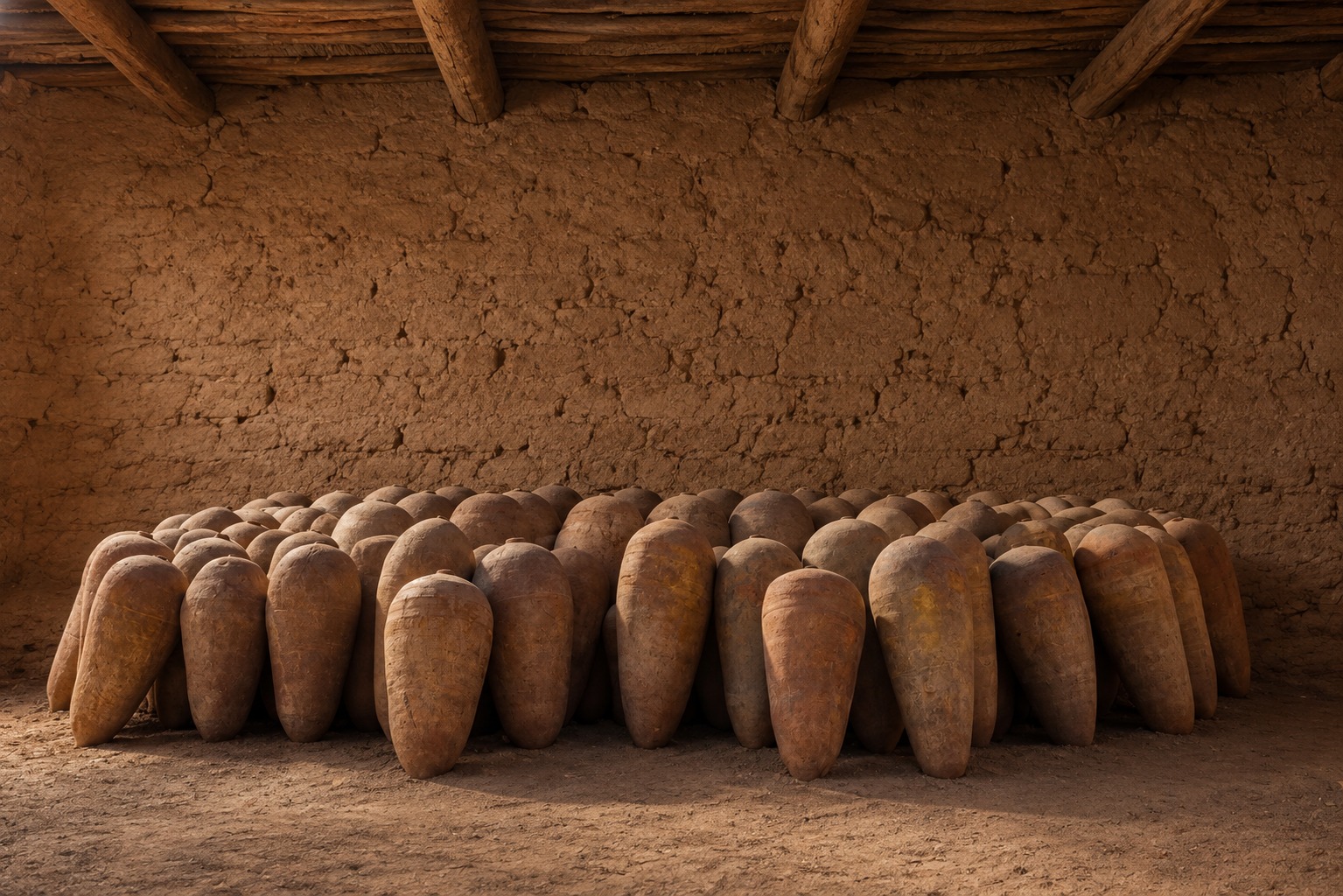
Vasija tradicional de la vitivinicultura peruana
EDITORIAL

A new era for Peruvian wine and its heritage varieties

Pablo Ugarte

Travelling through Peru’s wine-growing valleys and tasting its wines over the past four years has revealed a story that had remained largely invisible to me and, I believe, to much of the continent. What began as a series of technical visits ultimately led to the conviction that one of the most interesting developments in South American wine is taking place in Peru.

01 / VARIETIES

Heritage Varieties

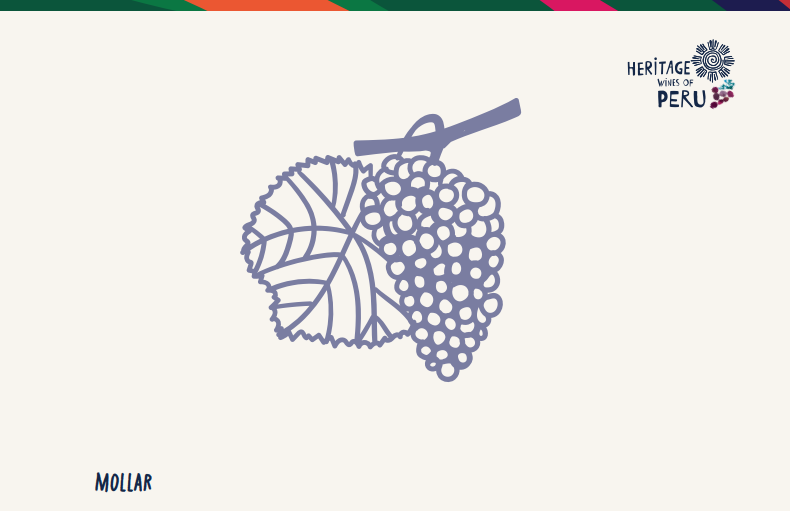
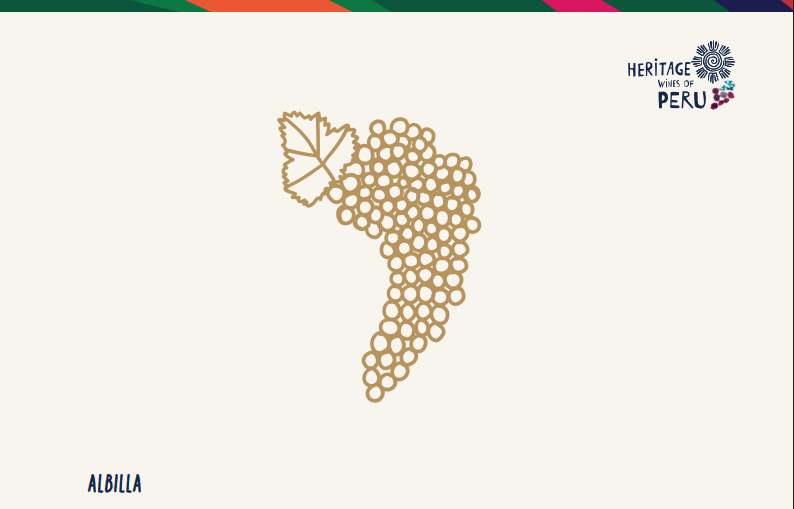
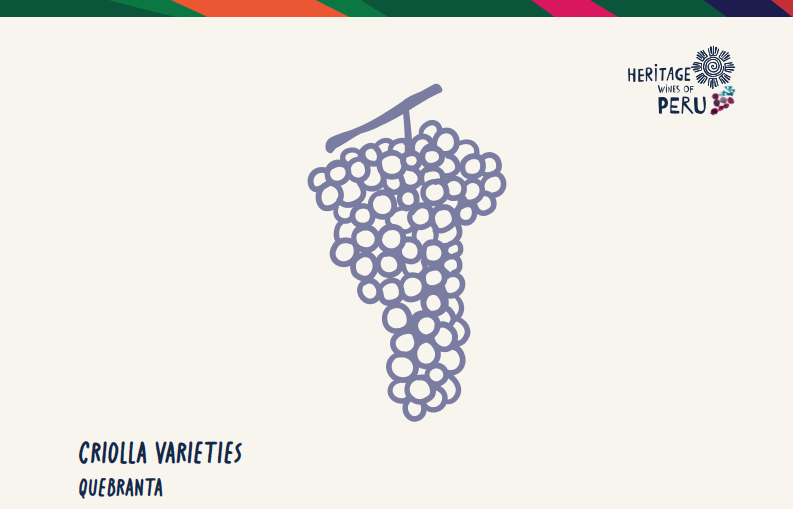
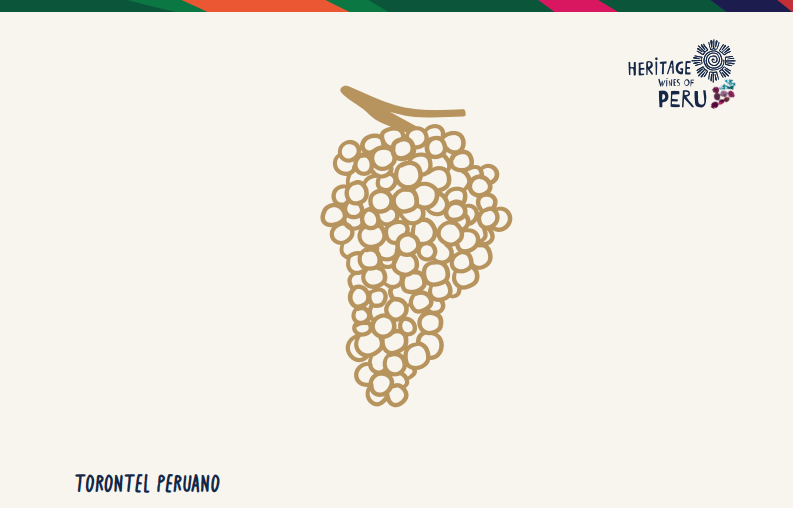
Original illustrations from the guide. Seven traditional and Criolla varieties documented in the publication.

Peruvian viticulture has one of the longest histories in South America. Since the arrival of Spanish vines in the sixteenth century, European varieties (traditional varieties) have adapted to Peru’s valleys, giving rise to a rich viticultural heritage, further enriched by natural hybridisation and spontaneous somatic mutations (Criolla varieties). Today, traditional and Criolla varieties make up Peru’s heritage varieties and form a fundamental part of the country’s wine and pisco identity.

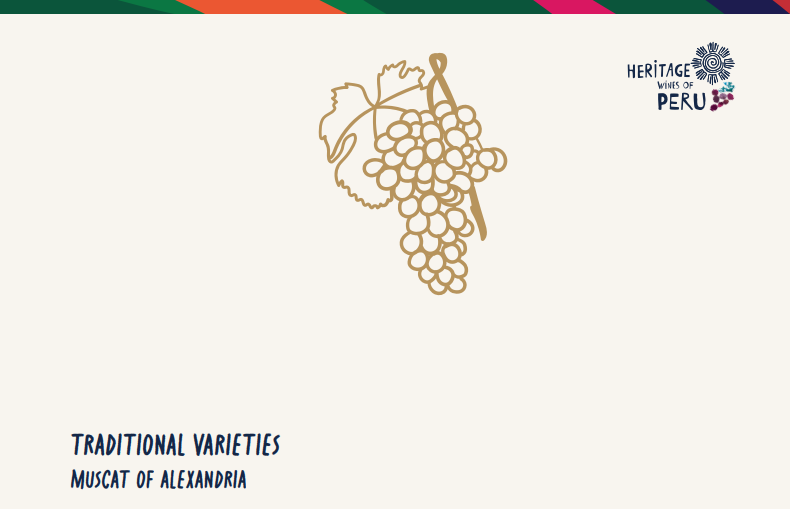
Ilustración original de Moscatel de Alejandría en la guía
Traditional

Muscat of Alexandria

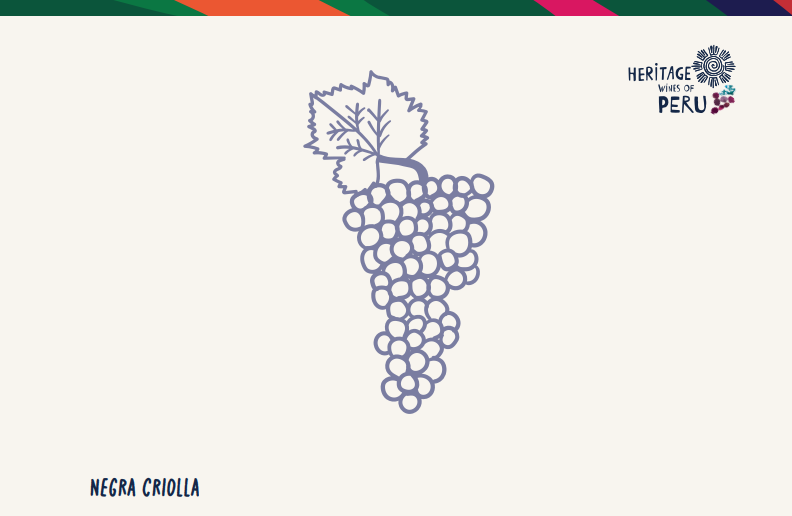
Ilustración original de Negra Criolla en la guía
Traditional

Negra Criolla

Ilustración original de Mollar en la guía
Traditional

Mollar

Ilustración original de Albilla en la guía
Traditional

Albilla

Ilustración original de Quebranta en la guía
Criolla

Quebranta

Ilustración original de Torontel Peruano en la guía
Criolla

Torontel Peruano

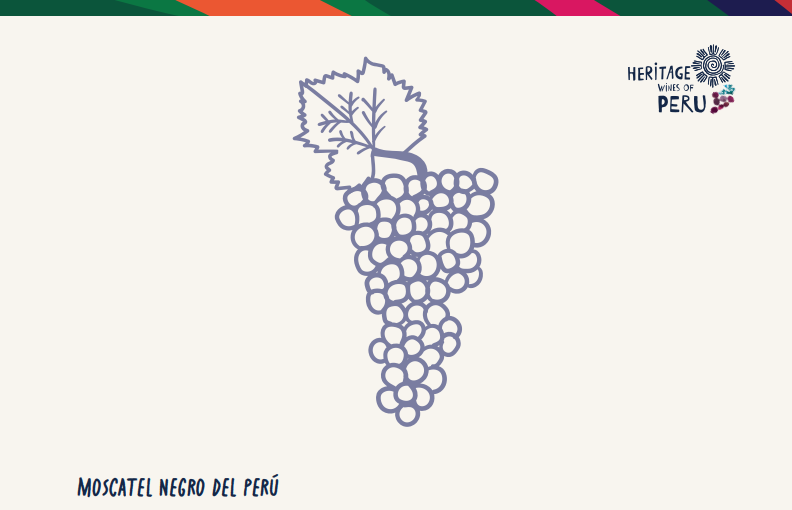
Ilustración original de Moscatel Negro del Perú en la guía
Criolla

Moscatel Negro del Perú

02 / TERRITORY

Peru’s Wine Regions

Original map from the guide, showing Peru’s wine regions differentiated by colour, together with their main wine-growing areas.

Mapa original de vinos patrimoniales del Perú de la página 8 de la guía
03 / TERROIRS

Six regions, many expressions

A journey from Áncash to Tacna through six wine regions, where terroir, heritage varieties and tradition give rise to unique expressions.

Fotografía y diseño de la sección Áncash de la guía original
WINE-GROWING REGION

Áncash

Huarmey and Las Calaveras

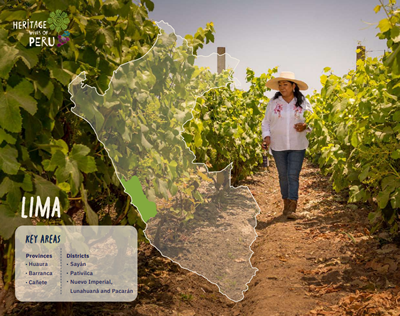
Fotografía y diseño de la sección Lima de la guía original
WINE-GROWING REGION

Lima

Huaura, Barranca and Cañete

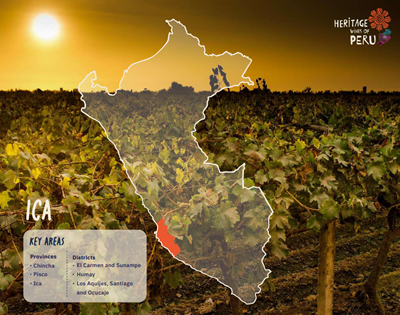
Fotografía y diseño de la sección Ica de la guía original
WINE-GROWING REGION

Ica

Chincha, Pisco and Ica

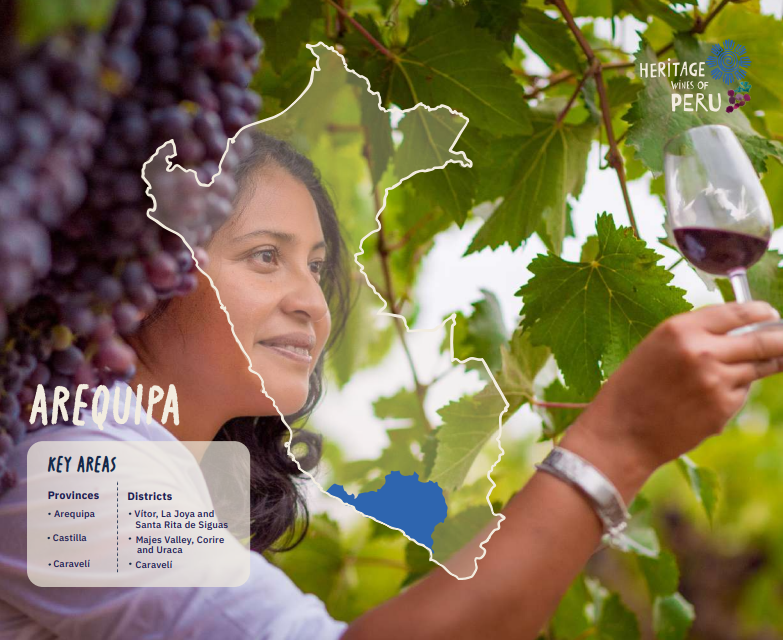
Fotografía y diseño de la sección Arequipa de la guía original
WINE-GROWING REGION

Arequipa

Vítor, Majes and Caravelí

Fotografía y diseño de la sección Moquegua de la guía original
WINE-GROWING REGION

Moquegua

Moquegua Valley

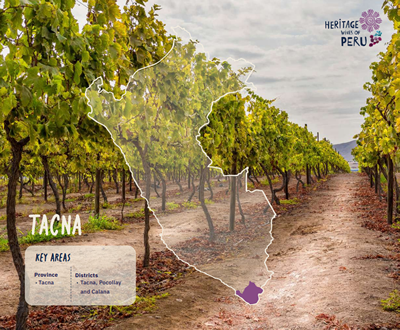
Fotografía y diseño de la sección Tacna de la guía original
WINE-GROWING REGION

Tacna

Pocollay, Calana and Magollo

04 / BEHIND THE GUIDE

The story behind these pages

A co-production by Catad’Or and Perú Hace Vino, sponsored by Industria Corchera Amorim.

Author: Pablo Ugarte · Editorial Director: Sofía Le Foulon · Design and Layout: Romina Sandrock · Production and Coordination in Peru: Pedro Cuenca Espinoza.

THE COMPLETE COLLECTION

Discover the wines

Explore the individual profiles of the 62 wines featured in the guide, with tasting notes, scores, technical information, sensory profiles, food pairings and serving temperatures.

VIEW ALL WINES IN THE GUIDE ↗ ↓ DOWNLOAD PDF GUIDE

Heritage strain

Loading...

Wine-growing region

Loading...

Peruvian New Wine and Its Heritage Grape Varieties

Editorial · Pablo Ugarte

Travelling through Peru’s wine-growing valleys and tasting its wines over the past four years has revealed a story that had remained largely invisible to me and, I believe, to much of the continent. What began as a series of technical visits ultimately led to the conviction that one of the most interesting developments in South American wine is taking place in Peru.

During this time, what I found went beyond new wineries or improved winemaking techniques. I found producers who had decided to look to the past in order to build the future. Families who were beginning to reinterpret varieties that for decades seemed destined almost exclusively for pisco production, but which today are revealing a remarkable ability to produce fine, dry wines with a natural affinity for food.

Peru’s different valleys reveal a remarkable diversity of landscapes, reflecting a country with a long and rich agricultural history that has also embraced its heritage with an admirable sense of belonging. From small-scale growers to more technologically advanced wineries, all seem to share the same conviction: heritage is not simply an archaeological relic of the past, but the foundation on which to build the future of Peruvian wine.

While much of South American viticulture built its international reputation on French varieties, Peru is beginning to follow a different path. It has not turned its back on them; on the contrary, they coexist naturally in many of its vineyards. Yet the country seems to have understood that its greatest distinction lies precisely in those varieties it has managed to preserve over the centuries

The future of Peruvian wine does not seem to lie in imitating its neighbours, but in reviving the heritage varieties that much of South America gradually left behind. This, perhaps, is where its greatest distinction lies. Nor does its future lie in a single emblematic variety, which could well be Quebranta, but in the extraordinary diversity of a viticultural heritage that has survived for centuries and is now beginning to find contemporary expression. This heritage represents Peru’s greatest opportunity to build a distinctive identity for its wine, one that is fully recognisable on the international stage.

There is a personality to these wines that is genuinely surprising. In their pure fruit, balance and textures, you can sense the influence of the desert, the proximity of the Pacific Ocean, the contrast between the light filtered by coastal cloud cover and the intense sunlight of the inland valleys, the wide diurnal temperature range, the salinity brought by desert sands swept towards the vineyards by sea breezes, the volcanic soils of Arequipa and the ever-present Andes. These are wines in which landscape, history and culture come together with a coherence that is difficult to find elsewhere in the Americas.

The revival of traditional varieties such as Negra Criolla (Listán Prieto), Muscat of Alexandria (Italia), Mollar and Albilla, together with Criolla varieties such as Quebranta, Moscatel Negro del Perú and Torontel Peruano, is far more than an exercise in preserving viticultural heritage. It represents a new interpretation of Peruvian wine, one capable of engaging with the country’s extraordinary cuisine and reaching consumers who value authenticity over uniformity.

Perhaps in a few years’ time, these names will no longer be familiar only to Peruvians, but will begin to find a place of their own on the wine lists of the world’s great restaurants. If that happens, it will represent more than the success of a new category of wine. It will confirm that a country chose to reconnect with an essential part of its heritage and transform it into a contemporary expression of identity—one that we will be delighted to have helped bring to wider attention through this project.

This guide would not have been possible without the generous participation of the Peruvian producers who, over this period, have opened the doors of their vineyards and wineries and uncorked their wines to share their stories and their vision for the future.

Special recognition must go to Pedro Cuenca, a key partner in this project and director of Perú Hace Vino, who has been our host and guide over the past few years and who, from the outset, understood the need to promote Peru’s heritage varieties beyond its borders. His collaboration, together with that of the entire Perú Hace Vino team, was essential to the production and logistical coordination of the project in Peru and made our journey through the country’s principal wine-growing valleys possible.

With Catad’Or and Perú Hace Vino as co-producers, and the invaluable support of Industria Corchera Amorim as sponsor, we were able to develop a project that brings together Peru, Chile and Portugal with the aim of documenting and sharing a reality that is now beginning to reveal the full richness and individuality of Peruvian wine to the world.

Finally, my deepest thanks go to Sofía Le Foulon, my partner, editor of the guide and qualified wine taster, who accompanied me throughout all the tastings and brought these texts together into a coherent whole, contributing her professionalism and rigour at every stage.

MEET THE TEAM

Guide to the Heritage Wines of Peru

Pablo Ugarte

Author

Pablo Ugarte is a prominent figure in the international wine industry and a leading name in Chilean music. A specialist in sensory evaluation, strategic communication and the promotion of wine-growing regions, he has more than thirty years of experience in bringing wine to international audiences.

He is CEO of CATADOR SpA, organiser of the Catad'Or World Wine Awards and Catad'Or World Spirits Awards, and Vice-President of VINOFED (World Federation of Major International Wine & Spirits Competitions).

He holds a Diploma in Wine from the Pontificia Universidad Católica de Chile and has served as a judge at more than fourteen international competitions, as well as leading tastings, seminars, conferences and specialist training programmes across the Americas, Europe and Asia.

He is the author of the Itata Valley Wine Guide. Small-Scale Farming Families (Chile) and a co-taster for the Alistair Cooper MW by Catad'Or Wine Guide. His work has focused on promoting wines with a strong sense of identity, heritage varieties and emerging wine regions in Latin America, championing an approach that brings together quality, origin, culture and sustainability.

As a specialist wine communicator, he has published articles in international media including Wine-Searcher and Prazeres da Mesa, among others.

Alongside his career in wine, he is also a founding member, bassist and vocalist of the Chilean band Upa!, one of the most representative groups of the country’s 1980s pop scene. His experience across both culture and wine has enabled him to develop a distinctive approach to communication that brings together identity, heritage and emotion.

Sofía Le Foulon

Editor

Sofía Le Foulon is Development Director and Technical Director of Catad’Or World Wine Awards and Catad’Or World Spirits Awards

She is editor of the Alistair Cooper MW by Catad’Or Wine Guide, a bilingual digital publication now in its sixth edition, and of the Itata Valley Wine Guide. Small-Scale Farming Families. Her editorial experience has enabled her to build a career in wine communication and specialist wine content.

A graduate in Design from the Pontificia Universidad Católica de Chile, she also holds a Master’s degree in Cultural Management. She has served as a judge and taster at international wine competitions in Europe and Latin America. She holds the WSET Level 2 Award in Wines with Distinction and is currently a WSET Level 3 candidate.

Pedro Cuenca Espinoza

Production and Logistics Coordination in Peru

Pedro Cuenca Espinoza is a sommelier and Director and Co-Founder of Perú Hace Vino, a platform dedicated to promoting Peruvian wine and raising its profile. He has extensive experience in organising events, food and wine activities, and promotional initiatives aimed at connecting Peruvian wine with consumers and hospitality professionals.

Through Perú Hace Vino, he organises events such as the Salón del Vino Peruano, which brings together producers from different regions of the country, with a particular focus on small and medium-sized wineries. His work seeks to strengthen Peru’s wine identity, promote its heritage grape varieties and create new opportunities for Peruvian wines to gain greater visibility in restaurants, hotels and the domestic market.

Credits

Guide to the Heritage Wines of Peru
FIRST EDITION · 2026
A co-production by
Catad’Or y Perú Hace Vino
Author
Pablo Ugarte
Editorial direction
Sofía Le Foulon
Design and layout
Romina Sandrock
Production and logistical coordination in Peru
Pedro Cuenca Espinoza — Perú Hace Vino
Sponsor
Industria Corchera Amorim
Photography
Courtesy of Perú Hace Vino
Contributors
Dra. Aybel Almanza Cano
Rodrigo Avilés

Acknowledgements

To Pedro Cuenca Espinoza and the entire Perú Hace Vino team for their collaboration and commitment to this project.

To Pedro Félix and Felipe Fellay of Industria Corchera Amorim for their invaluable support and confidence in this publication.

To Dr Aybel Almanza Cano for her technical contribution to the development of this publication.

To all the producers of wines made from heritage varieties featured in this guide for their dedication, commitment and contribution to preserving and promoting this viticultural heritage.